
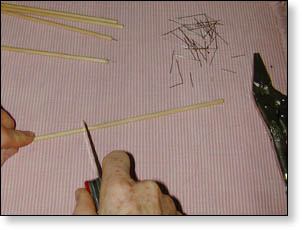
This tensegrity model building technique is quick and easy. You will need some 3/16″ hardwood dowels, straight steel pins, and 2″ x 1/16″ rubber bands. Cut the rods into 6″ sections.
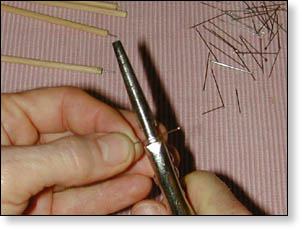
Cut the pins in half with the cutting back of a needle nose pliers.
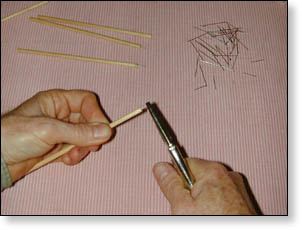
Grab the head half of the cut pins with your pliers and twist them into the ends of your dowels. Join sets of rubber bands, by loop knotting them together, in sets twos or sets of 3. Hook your sets of bands on your dowels. If need be wrap the bands around the pin to prevent them from slipping.
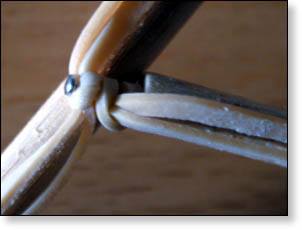
Join the dowels to each others bands by inserting the pin heads into the band loop knots of other dowels.
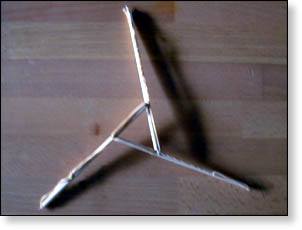
Here we have three dowels joined to each others bands. This is the beginning of a ziz-zag tensegrity.
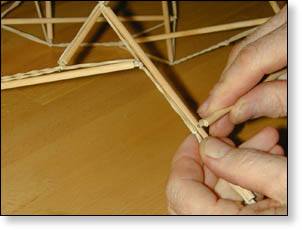
Continue to add dowels to the bands of other dowels.
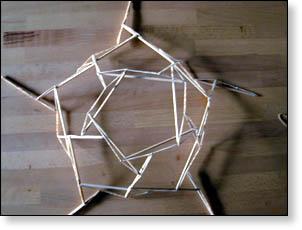
You can see the beginning of a truncated dodecahedron tensegrity.
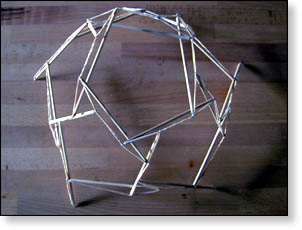
The bands are self adjusting and allow you to construct shapes fast. If you want to make the model out last the bands use clove hitches to replace the bands with strong thread.
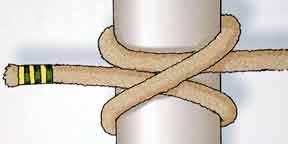
Clove Hitch
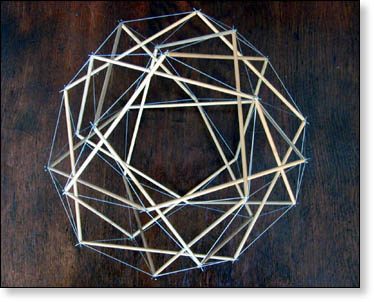 Here is a finished basket weave tensegrity.